Records keep their sources.
Every record carries a citation to where it came from, so anyone can check the original.
 THE PARROTS’
A living project · Always under construction
The Parrots’ Project gathers what people have recorded about parrots (scientific papers, veterinary case reports, avicultural journals, wildlife photographs, theses and dissertations, and field and citizen-science observations) into one library. Each record retains its original source and context, allowing visitors to explore how different kinds of knowledge connect. For example, someone researching a parrot species could bring together its taxonomic history, ecology, conservation status, veterinary research, avicultural experience, photographs, and historical records to build a more complete understanding of the species and its relationship with people.
Our goal is to bring together knowledge from every corner of the parrot world, connecting science, veterinary medicine, aviculture, conservation, history, and the experiences of people who share their lives with parrots. We believe everyone has something to contribute and something to learn. Researchers, veterinarians, aviculturists, caregivers, conservationists, students, and parrot enthusiasts are all teachers here. This is a living project that belongs to all of us, built on the knowledge and contributions of many people, past and present. By learning from one another and connecting what we already know, we hope to help make a better future possible, one where humans and parrots continue to coexist and thrive, both in the wild and in our homes.


Our story

Scroll through the preview, then select “Read the full story” at the end.
The Parrots’ Project began with a discarded National Geographic magazine.
I was about twelve, growing up in Alaska. My mother brought home old magazines that the library was discarding. Their worn pages opened windows into places far beyond the cold and isolation around me.
One afternoon, I opened a magazine and found photographs of macaws eating clay along Peru’s Tambopata River. There was a blue-and-gold macaw, and hundreds of parrots gathered against reddish-orange riverbanks, surrounded by rainforest.
I wanted to know why.
Why would parrots eat clay? What brought them to that particular place? What was happening in those photographs that I could not yet understand?
That became one of the first scientific questions that felt like mine. I remember thinking, “I am going to be a parrot scientist.” Within the following year, I was saying that I would earn a PhD studying parrots.
I could not have known how long that journey would take, how difficult parts of it would become, or how many people and birds would help shape it. That question gave me a direction.
My education eventually took me through the University of Oregon and to Texas A&M University, where I earned my PhD in Biomedical Sciences in 2022 and continued into postdoctoral research. Over more than twenty years working with parrots, my interests expanded into their behavior, nutrition, health, reproduction, cognition, and relationships with their environments.
Parrots became part of my daily life as well as my scientific work. The more I learned, the more questions I had.
The beginnings of The Parrots’ Project took shape through another encounter with that original question.
Read the full storyIn memory of TacoBell, a crazy little Monk Parakeet whom I often feel I failed because I didn’t know about him, but who inspires me every day to try to do just a little bit better.
Explore National Geographic’s magazine archive Select January 1994. Archive access may require a subscription.
How we work
Every record carries a citation to where it came from, so anyone can check the original.
Whether a bird was wild or in human care, where and when it was observed, and how the information was reported remain part of the record.
When sources disagree, both reports can be kept and labeled. Disagreements are often where the useful questions are.
A field observation, a captive diet record, a controlled experiment, and a secondhand account carry different weight, and records say which they are.
We intend to explore AI tools to help find and link records across the library. People will review the results, and every connection will trace back to its sources. We have not chosen specific tools or methods. The methodology will be documented as the project develops.
The Parrots’ Project is a participating node of The Open Commons of Learning.
The costs of the tools behind this work, and why I use them anyway.
The costs
What these tools cost
This statement is mine alone. I don’t expect anyone else to share it.
The tools I use to build this work have a destructive side:
- Water
- Data centers use large amounts of water for cooling, and in dry regions they can draw down local supplies, including groundwater.
- Mining
- Rare earth elements, cobalt, lithium, copper, and tantalum are dug from landscapes at real cost to ecosystems, and too often to the people who mine them, sometimes including children.
- Energy
- Training and running AI, and powering every device, still depends heavily on electricity from fossil fuels.
- Manufacturing
- Making chips consumes huge amounts of energy and ultrapure water, and releases potent greenhouse gases.
- Electronic waste
- Devices are replaced quickly. Much of the waste is shipped abroad and taken apart by hand, exposing workers to toxic metals.
- Hidden labor
- AI systems rely on low-paid workers who label data and filter out disturbing content, often in the Global South.
- Other people’s work
- These models were trained on writing, art, and research made by people who were rarely asked and seldom paid.
- Noise
- Data centers run cooling fans and backup generators around the clock. People living nearby describe a constant hum that disrupts sleep and daily life.
- Local communities
- New data centers claim land and strain power grids, which can raise electricity costs for the people living nearby.
It would be arrogant to ask others to give up these tools while I believe that I should keep using them. So I’m not asking.
Right or wrong, I believe that in this case the ends justify the means, as long as the end is to share information freely and to create high-quality educational resources that help people understand ecosystem function, organismal biology, human ecology, and climate processes.
Part of my reason for creating this work and sharing it openly is to avoid doubling efforts. When knowledge is shared, the cost of building it is paid once instead of over and over. When I looked, there did not appear to be much out there in the same vein. If you know of work like this, please connect. I would much rather join forces than duplicate.
For advice about an individual bird’s health or care, consult an avian veterinarian.
The Library & Archive
The library is where the research begins. The cockatoo project started by searching it for every reference to cockatoo diets.
Parrot books, avicultural journals dating back to the early 1900s, society bulletins, veterinary case reports, peer-reviewed literature, and photographs. The collection is growing and is used for project research. It is not yet open to visitors.
Items that are not available elsewhere online are being digitized, beginning with sources used in the cockatoo project. Scans are held as part of the lab’s research collection and are not distributed, though copies are provided to the original publishers on request where possible. We share what the research draws from them: citations, extracted records, and findings, each traced back to its original source.
A catalog that records each item’s origin, date, location, permissions, and context, so information stays traceable to its original record.
Explore publications & historical archives →
Items we are looking for; request one or help find one
We welcome conversations about a permanent home and long-term support for the collection.
Start a conversation about the collectionWhat you can use today
Find scientific databases, publications, research tools, historical archives, veterinary and avicultural references, and citizen-science platforms.
Browse the resource directory →
Five knowledge graphs are publicly accessible as working drafts: three species-and-literature graphs, a medical literature graph, and a historical taxonomy graph.
Literature and sources connected to New Zealand parrots (Strigopidae), with Clements and IUCN Red List status.
Last updated: Available nowSources linked to 22 taxa, with Clements and IUCN Red List status
Last updated: Available nowSources linked to 32 taxa, with Clements and IUCN Red List status
Last updated: Available nowDiseases, pathogens, drugs, diet-related disease, reference values, examinations and imaging, with parrot-specific vs general avian evidence
Last updated: Available nowHistorical names, genus assignments and checklist decisions for cockatoos, the genus Psittacus, Pyrrhura conures, and New Zealand parrots; timeline and verification notes.
Last updated:Latest from the project
Explore parrot vocalizations, the words we use to describe them, and how wild-bird recordings can contribute to science.
Exploring the information hidden in parrot feathers through hyperspectral imaging.
Introducing our first interactive history of parrot scientific names, beginning with the cockatoos.
It began with a discarded National Geographic magazine, a photograph of macaws eating clay along Peru’s Tambopata River, and a twelve-year-old in Alaska who wanted to know why.
The wider parrot community
Associations, conservation groups, research networks, bird clubs, and the people working for parrots. Looking for databases or references? Browse Organizations & Resources.

Phoenix Landing’s Helping Parrots shares personal stories and practical experiences of caring for parrots.
Read Helping Parrots ↗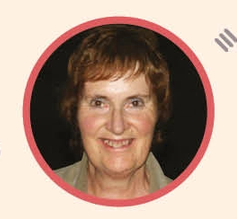
An article collection connecting decades of practical aviculture with parrot welfare and conservation. Start with her reflections on Loro Parque and fifty years of parrot breeding.
Read Rosemary Low’s articles ↗Explore public collections and wild and feral parrot populations around the world, with a map and a place list grouped by continent.
Find places to see parrots →Available nowOrganizations in aviculture, research, welfare, and conservation.
Browse organizations →Available nowClubs that meet in person or online.
Find a club →Available nowConferences, expos, and meetings from official organizer pages.
See the calendar →Available nowStart small with a short, curated list of people and organizations worth following. Explore the research pack to find your footing.
Explore starter packs →
His lory and macaw artwork appears on this site!
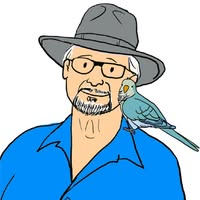
A daily gag cartoon about parrots, created and drawn by Rex A. Jones.

Explore The Avian Exchange’s breeder directory and discover aviculturists in the bird community.
Visit The Avian Exchange ↗Featured learning & enrichment
Explore practical perspectives on parrot training, care, and enrichment from these featured creators and businesses.
Training videos
Training strategies, foraging, and enrichment from Hi Red Bird! Click a video snapshot to watch on YouTube, where you can also subscribe to the creator’s channel.
Parrot care & behavior videos
Parrot care and behavior perspectives from Zeb Ernest. Watch his discussion of why parrots may bond to one person and what caregivers can do. Click the snapshot to watch on YouTube, where you can also subscribe to the channel.

Training & care education
A UK-based parrot training and care consultancy offering consultations and educational courses, with online services for caregivers worldwide.
Explore Best Behaved Birds ↗Featured on YouTube & Instagram
Explore parrot training and care videos from Best Behaved Birds trainer Sophie. Follow @birdnerdsophie on YouTube and Instagram.
Enrichment & bird toys
A family-owned business in Pittsfield, Maine, creating handmade toys for birds. Explore their enrichment ideas and bird toys through their official page.
Explore The Leather Elves ↗We recognize the greater parrot community around the world for its contributions to sharing and preserving parrot knowledge over the years.
Work by others is credited and linked to its original source as much as possible. Organizations and people mentioned here are not endorsing or partnering with the project unless we say so.
People behind the project
Our community of collaborators is growing, bringing expertise in research, aviculture, animal welfare, data science, education, and other fields. We welcome contributions from around the world.
Jason Crean and Tatiana Tatum provided foundational support and contributions that helped make The Parrots’ Project possible.

Founder and Director
Research focuses on parrot dietary habits and nutrient requirements, including their roles in health, longevity, reproduction, and cognitive function. PhD in Biomedical Sciences at Texas A&M University. Founder of The Parrots’ Project.
Texas A&M profile
Collaborator
Jason Crean is a biologist, educator, and consultant. His work includes professional learning for science teachers and consulting on animal nutrition and dietary enrichment. He is a co-author of the student cockatoo diet project.
Jason’s professional website
Collaborator
Tatiana Tatum is a professor and chair in Biological Sciences at Saint Xavier University. Her research includes pollution, toxicology, and genetic variation, and she supports undergraduate research. She is a co-author of the student cockatoo diet project.
Tatiana’s Saint Xavier profile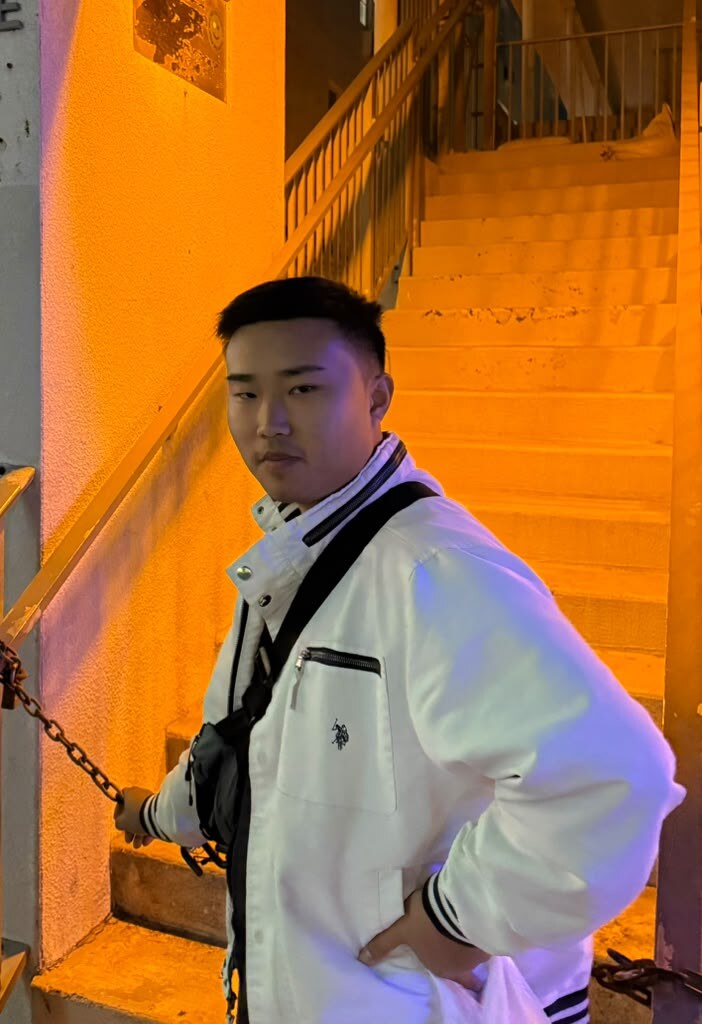
Collaborator – Chinese Language Translator
Howdy! I’m an undergraduate researcher studying under Dr. Voltura. I was born in Nanjing, China, but spent a good chunk of my life in the Houston area. Currently, I am a student of Texas A&M and studying Biochemistry. The parrot project intrigued me because, well, parrots. But other than that, the multifaceted approach of the project is very distinct and novel, and being able to participate is very exciting.
Outside of helping with the research, I help with translating the information we have into Chinese — more often than not, parrots are seen as “exotic pets” than what they truly are: an important part of ecosystems. Such problem especially prevails in China, where rapid modernization has led to much habitat destruction of these precious birds, while much of the population, even those who grew up beside them, don’t have much awareness of their significance.
I believe by educating the people about parrots, more of them will be willing to participate in our conservation efforts for not only the birds, but also wildlife in general. I hope to see people’s passion for protecting the earth to burn like a wildfire, and who knows, maybe this is the spark to start it!
Welcoming Committee
Biography and affiliation forthcoming.
Profile links forthcoming.
Scientific and Data Collaborator
Biography, affiliation, and research interests forthcoming.
Profile links forthcoming.
Parrots in Ethical Research Lead
Preferred full name forthcoming.
Jen will lead our Parrots in Ethical Research initiative, emphasizing research approaches that give birds opportunities to choose whether they participate in research.
Biography and affiliation forthcoming.
Profile links forthcoming.
Get involved
Old parrot books, avicultural magazines, society newsletters, breeding records, and photographs may hold observations found nowhere else.
Offer materials ↗Students and volunteers can annotate references, locate requested PDFs, extract data, catalog, translate, and communicate science, as the cockatoo project students did.
See volunteer roles →Photographs and notes of parrots feeding are useful records. Share them through the project on iNaturalist.
Join on iNaturalist ↗If something on this site is wrong or out of date, tell us and include the source.
Send a correction ↗See our personal investment, current funding needs, and ways to support continued development.
See ways to support →From the founder
Thank you for visiting. If you have materials, questions, research ideas, or corrections, We would like to hear from you.
Contact the project ↗EV Voltura, PhD, Founder and Director
The Parrots’ Project. https://theparrotsproject.org/ (accessed [date]).
Replace the accessed date with the date you consulted this page. This is a living resource and its contents change.


