Parrot emergency

Graphs / CROPd / Cacatuidae

CROPd: Cacatuidae

Version 25NOV2026

CROPd: Cacatuidae brings together diet records for every cockatoo species, from the Palm Cockatoo to the Cockatiel. Explore the knowledge graph to follow each species to its recorded foods and sources, or open the menu to compare what wild and captive cockatoos eat.

Records are counts of diet reports, not amounts eaten. Read about the sources or see how to cite this volume.
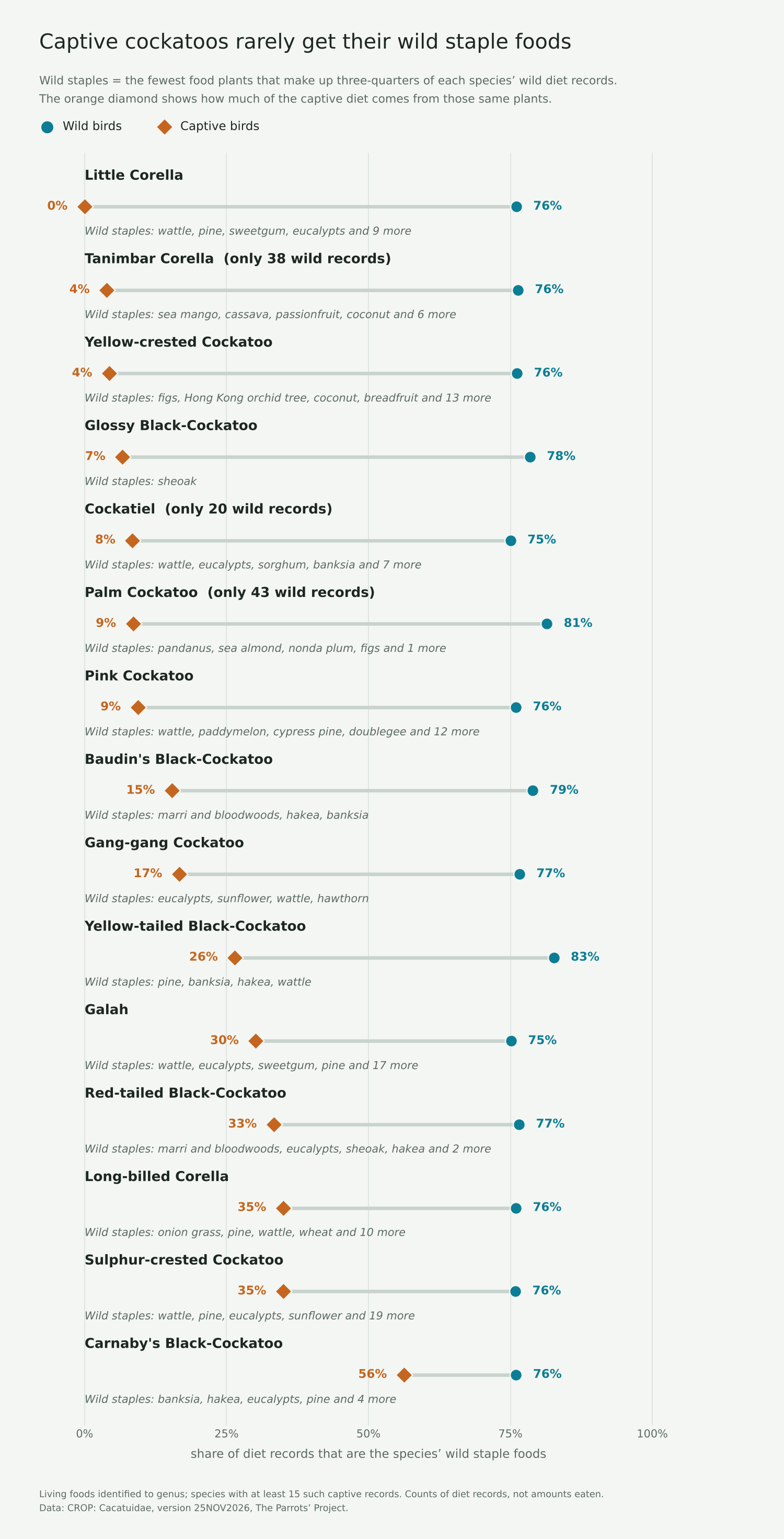
Dot chart titled “Captive cockatoos rarely get their wild staple foods.” For 15 cockatoo species, a circle shows the share of wild diet records made up of each species’ wild staple foods (75 to 83 percent), and a diamond shows the share of captive diet records from those same plants. Captive shares are mostly low: Little Corella 0 percent, Tanimbar Corella 4 percent, Yellow-crested Cockatoo 4 percent, Glossy Black-Cockatoo 7 percent, Cockatiel 8 percent, Palm Cockatoo 9 percent, Pink Cockatoo 9 percent, Baudin’s Black-Cockatoo 15 percent, Gang-gang Cockatoo 17 percent, Yellow-tailed Black-Cockatoo 26 percent, Galah 30 percent, Red-tailed Black-Cockatoo 33 percent, Long-billed Corella 35 percent, Sulphur-crested Cockatoo 35 percent, and Carnaby’s Black-Cockatoo 56 percent.
Wild staples are the fewest food plants that make up three-quarters of each species’ wild diet records. The legend marks wild birds with a circle and captive birds with a diamond. Counts of diet records, not amounts eaten.
  • Circle: wild birds
  • Diamond: captive birds