Los registros conservan sus fuentes.
Cada registro incluye una referencia a su fuente para que cualquiera pueda consultar el original.
 THE PARROTS’
Un proyecto vivo · Siempre en construcción
The Parrots’ Project reúne en una sola biblioteca lo que las personas han documentado sobre los loros (artículos científicos, informes de casos veterinarios, revistas de avicultura, fotografías de fauna silvestre, tesis de maestría y doctorado, y observaciones de campo y de ciencia ciudadana). Cada registro conserva su fuente y contexto originales, lo que permite explorar cómo se conectan distintos tipos de conocimiento. Por ejemplo, una persona que investigue una especie de loro podría reunir su historia taxonómica, ecología, estado de conservación, investigación veterinaria, experiencia avicultural, fotografías y registros históricos para comprender mejor la especie y su relación con las personas.
Nuestro objetivo es reunir conocimientos de todos los ámbitos del mundo de los loros, conectando la ciencia, la medicina veterinaria, la avicultura, la conservación, la historia y las experiencias de quienes comparten su vida con ellos. Creemos que todo el mundo tiene algo que aportar y algo que aprender. Investigadores, veterinarios, avicultores, cuidadores, conservacionistas, estudiantes y aficionados a los loros: aquí todos tenemos algo que enseñar. Este es un proyecto vivo que nos pertenece a todos, construido sobre los conocimientos y las contribuciones de muchas personas, del pasado y del presente. Al aprender unos de otros y conectar lo que ya sabemos, esperamos contribuir a un futuro mejor, en el que los seres humanos y los loros sigan coexistiendo y prosperando, tanto en la naturaleza como en nuestros hogares.
Nuestra historia
Desplázate por la vista previa y selecciona «Leer la historia completa» al final.
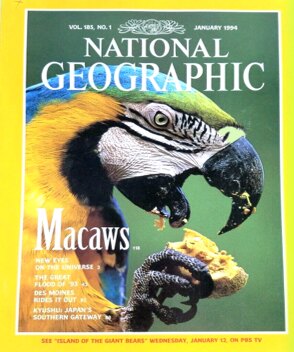
The Parrots’ Project comenzó con una revista National Geographic desechada.
Tenía unos doce años, creciendo en Alaska. Mi madre traía a casa revistas viejas que la biblioteca estaba desechando. Sus páginas gastadas abrían ventanas a lugares mucho más allá del frío y el aislamiento que me rodeaban.
Una tarde, abrí una revista y encontré fotografías de guacamayos comiendo arcilla a lo largo del río Tambopata en Perú. Había un guacamayo azul y amarillo, y cientos de loros reunidos contra las orillas rojizas del río, rodeados de selva.
Quería saber por qué.
¿Por qué los loros comerían arcilla? ¿Qué los llevó a ese lugar en particular? ¿Qué estaba ocurriendo en esas fotografías que aún no podía entender?
Eso se convirtió en una de las primeras preguntas científicas que sentí como mía. Recuerdo pensar: “Voy a ser científica de loros”. Al año siguiente, ya decía que obtendría un doctorado estudiando loros.
No podía saber cuánto tiempo tomaría ese viaje, cuán difíciles serían algunas partes, o cuántas personas y aves ayudarían a darle forma. Esa pregunta me dio una dirección.
Mi educación finalmente me llevó por la Universidad de Oregón y hasta Texas A&M University, donde obtuve mi doctorado en Ciencias Biomédicas en 2022 y continué en investigación posdoctoral. Durante más de veinte años trabajando con loros, mis intereses se expandieron hacia su comportamiento, nutrición, salud, reproducción, cognición y relaciones con sus entornos.
Los loros se convirtieron en parte de mi vida diaria, así como de mi trabajo científico. Cuanto más aprendía, más preguntas tenía.
Los inicios de The Parrots’ Project tomaron forma a través de otro encuentro con esa pregunta original.
Leer la historia completaIn memory of TacoBell, a crazy little Monk Parakeet whom I often feel I failed because I didn’t know about him, but who inspires me every day to try to do just a little bit better.
Explore National Geographic’s magazine archive Select January 1994. Archive access may require a subscription.
Cómo trabajamos
Cada registro incluye una referencia a su fuente para que cualquiera pueda consultar el original.
Whether a bird was wild or in human care, where and when it was observed, and how the information was reported remain part of the record.
When sources disagree, both reports can be kept and labeled. Disagreements are often where the useful questions are.
A field observation, a captive diet record, a controlled experiment, and a secondhand account carry different weight, and records say which they are.
We intend to explore AI tools to help find and link records across the library. People will review the results, and every connection will trace back to its sources. We have not chosen specific tools or methods. The methodology will be documented as the project develops.
The Parrots’ Project is a participating node of The Open Commons of Learning.
The costs of the tools behind this work, and why I use them anyway.
The costs
What these tools cost
This statement is mine alone. I don’t expect anyone else to share it.
The tools I use to build this work have a destructive side:
- Water
- Data centers use large amounts of water for cooling, and in dry regions they can draw down local supplies, including groundwater.
- Mining
- Rare earth elements, cobalt, lithium, copper, and tantalum are dug from landscapes at real cost to ecosystems, and too often to the people who mine them, sometimes including children.
- Energy
- Training and running AI, and powering every device, still depends heavily on electricity from fossil fuels.
- Manufacturing
- Making chips consumes huge amounts of energy and ultrapure water, and releases potent greenhouse gases.
- Electronic waste
- Devices are replaced quickly. Much of the waste is shipped abroad and taken apart by hand, exposing workers to toxic metals.
- Hidden labor
- AI systems rely on low-paid workers who label data and filter out disturbing content, often in the Global South.
- Other people’s work
- These models were trained on writing, art, and research made by people who were rarely asked and seldom paid.
- Noise
- Data centers run cooling fans and backup generators around the clock. People living nearby describe a constant hum that disrupts sleep and daily life.
- Local communities
- New data centers claim land and strain power grids, which can raise electricity costs for the people living nearby.
It would be arrogant to ask others to give up these tools while I believe that I should keep using them. So I’m not asking.
Right or wrong, I believe that in this case the ends justify the means, as long as the end is to share information freely and to create high-quality educational resources that help people understand ecosystem function, organismal biology, human ecology, and climate processes.
Part of my reason for creating this work and sharing it openly is to avoid doubling efforts. When knowledge is shared, the cost of building it is paid once instead of over and over. When I looked, there did not appear to be much out there in the same vein. If you know of work like this, please connect. I would much rather join forces than duplicate.
Para obtener asesoramiento sobre la salud o el cuidado de un ave en particular, consulta a un veterinario especializado en aves.
La biblioteca y el archivo
La investigación comienza en la biblioteca. El proyecto sobre cacatúas empezó buscando en ella todas las referencias a su alimentación.
Parrot books, avicultural journals dating back to the early 1900s, society bulletins, veterinary case reports, peer-reviewed literature, and photographs. The collection is growing and is used for project research. It is not yet open to visitors.
Items that are not available elsewhere online are being digitized, beginning with sources used in the cockatoo project. Scans are held as part of the lab’s research collection and are not distributed, though copies are provided to the original publishers on request where possible. We share what the research draws from them: citations, extracted records, and findings, each traced back to its original source.
A catalog that records each item’s origin, date, location, permissions, and context, so information stays traceable to its original record.
Explore publications & historical archives →
Items we are looking for; request one or help find one
Nos gustaría conversar sobre una sede permanente y el apoyo a largo plazo para la colección.
Conversemos sobre la colecciónLo que puedes usar hoy
Encuentra bases de datos científicas, publicaciones, herramientas de investigación, archivos históricos, referencias veterinarias y aviculturales, y plataformas de ciencia ciudadana.
Explorar el directorio de recursos →
Five knowledge graphs are publicly accessible as working drafts: three species-and-literature graphs, a medical literature graph, and a historical taxonomy graph.
Literature and sources connected to New Zealand parrots (Strigopidae), with Clements and IUCN Red List status.
Última actualización: Disponible ahoraSources linked to 22 taxa, with Clements and IUCN Red List status
Última actualización: Disponible ahoraSources linked to 32 taxa, with Clements and IUCN Red List status
Última actualización: Disponible ahoraDiseases, pathogens, drugs, diet-related disease, reference values, examinations and imaging, with parrot-specific vs general avian evidence
Última actualización: Disponible ahoraHistorical names, genus assignments and checklist decisions for cockatoos, the genus Psittacus, Pyrrhura conures, and New Zealand parrots; timeline and verification notes.
Última actualización:Lo último del proyecto
Explore parrot vocalizations, the words we use to describe them, and how wild-bird recordings can contribute to science.
Exploring the information hidden in parrot feathers through hyperspectral imaging.
Introducing our first interactive history of parrot scientific names, beginning with the cockatoos.
It began with a discarded National Geographic magazine, a photograph of macaws eating clay along Peru’s Tambopata River, and a twelve-year-old in Alaska who wanted to know why.
The wider parrot community
Associations, conservation groups, research networks, bird clubs, and the people working for parrots. Looking for databases or references? Browse Organizations & Resources.

Phoenix Landing’s Helping Parrots shares personal stories and practical experiences of caring for parrots.
Read Helping Parrots ↗
An article collection connecting decades of practical aviculture with parrot welfare and conservation. Start with her reflections on Loro Parque and fifty years of parrot breeding.
Read Rosemary Low’s articles ↗Explore public collections and wild and feral parrot populations around the world, with a map and a place list grouped by continent.
Find places to see parrots →Disponible ahoraOrganizations in aviculture, research, welfare, and conservation.
Explorar organizaciones →Disponible ahoraClubs that meet in person or online.
Encontrar un club →Disponible ahoraConferences, expos, and meetings from official organizer pages.
Ver el calendario →Available nowStart small with a short, curated list of people and organizations worth following. Explore the research pack to find your footing.
Explorar las guías para empezar →
His lory and macaw artwork appears on this site!
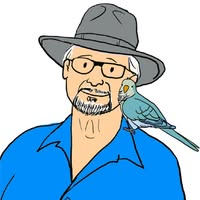
A daily gag cartoon about parrots, created and drawn by Rex A. Jones.

Explore The Avian Exchange’s breeder directory and discover aviculturists in the bird community.
Visit The Avian Exchange ↗Aprendizaje y enriquecimiento destacados
Explora las perspectivas prácticas sobre entrenamiento, cuidado y enriquecimiento de loros de estos creadores y empresas destacados.
Videos de entrenamiento
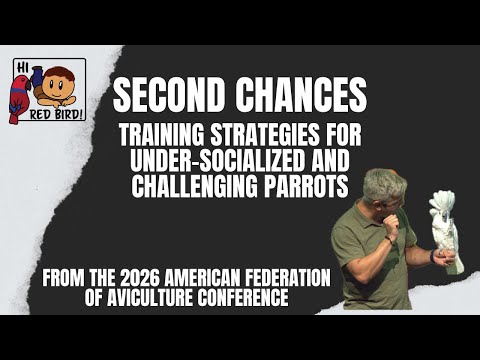
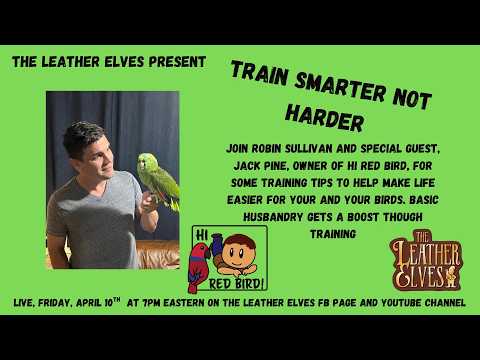
Training strategies, foraging, and enrichment from Hi Red Bird! Click a video snapshot to watch on YouTube, where you can also subscribe to the creator’s channel.
Parrot care & behavior videos
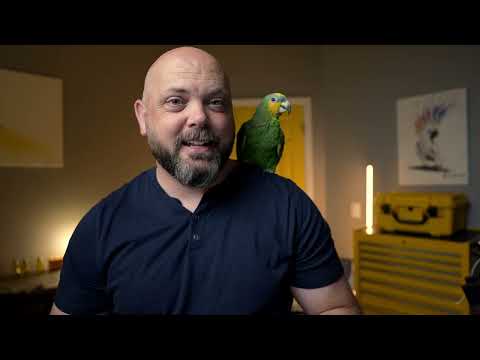
Parrot care and behavior perspectives from Zeb Ernest. Watch his discussion of why parrots may bond to one person and what caregivers can do. Click the snapshot to watch on YouTube, where you can also subscribe to the channel.
Training & care education
A UK-based parrot training and care consultancy offering consultations and educational courses, with online services for caregivers worldwide.
Explore Best Behaved Birds ↗Featured on YouTube & Instagram
Explore parrot training and care videos from Best Behaved Birds trainer Sophie. Follow @birdnerdsophie on YouTube and Instagram.
Enrichment & bird toys
A family-owned business in Pittsfield, Maine, creating handmade toys for birds. Explore their enrichment ideas and bird toys through their official page.
Explore The Leather Elves ↗People behind the project
Our community of collaborators is growing, bringing expertise in research, aviculture, animal welfare, data science, education, and other fields. We welcome contributions from around the world.
Jason Crean and Tatiana Tatum provided foundational support and contributions that helped make The Parrots’ Project possible.
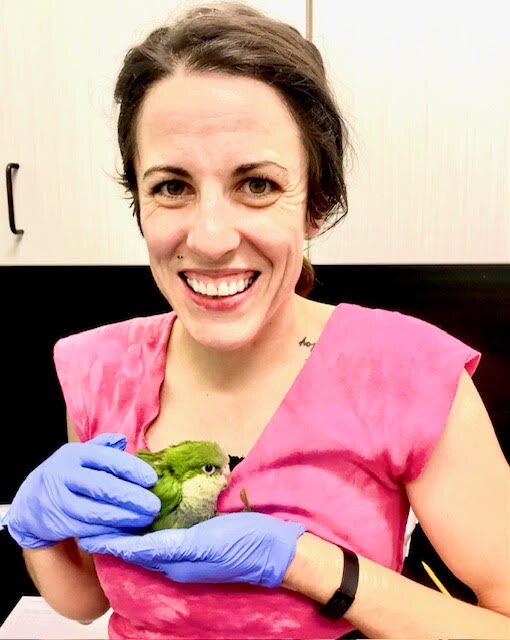
Founder and Director
Research focuses on parrot dietary habits and nutrient requirements, including their roles in health, longevity, reproduction, and cognitive function. PhD in Biomedical Sciences at Texas A&M University. Founder of The Parrots’ Project.
Texas A&M profile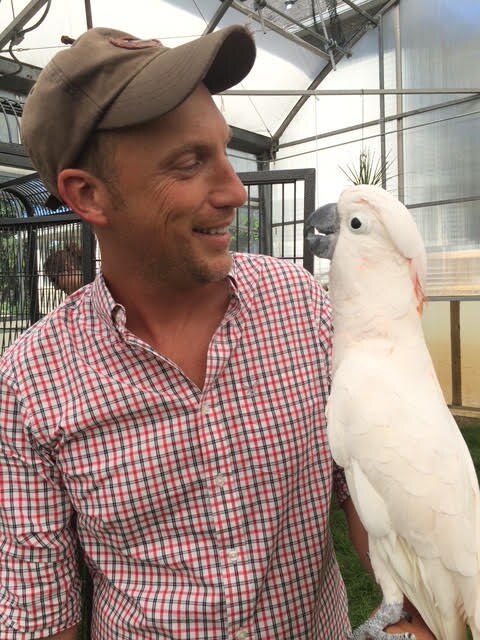
Collaborator
Jason Crean is a biologist, educator, and consultant. His work includes professional learning for science teachers and consulting on animal nutrition and dietary enrichment. He is a co-author of the student cockatoo diet project.
Jason’s professional website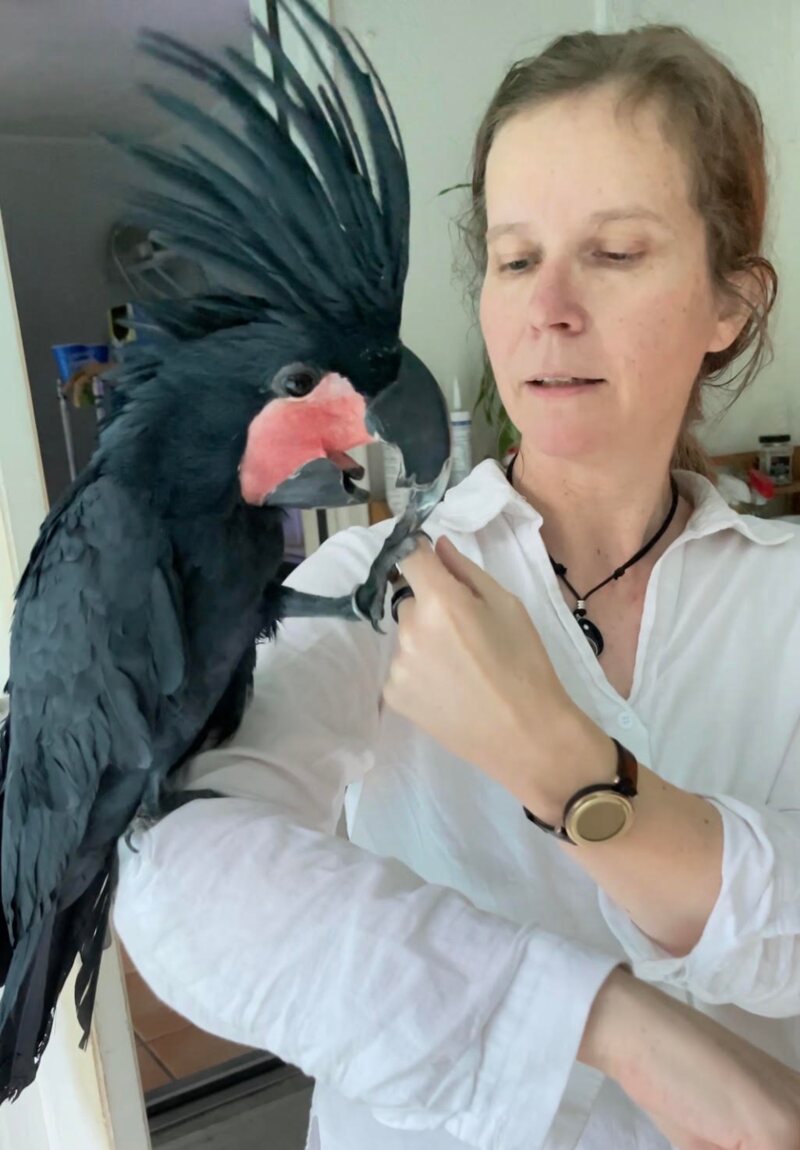
Collaborator
Tatiana Tatum is a professor and chair in Biological Sciences at Saint Xavier University. Her research includes pollution, toxicology, and genetic variation, and she supports undergraduate research. She is a co-author of the student cockatoo diet project.
Tatiana’s Saint Xavier profile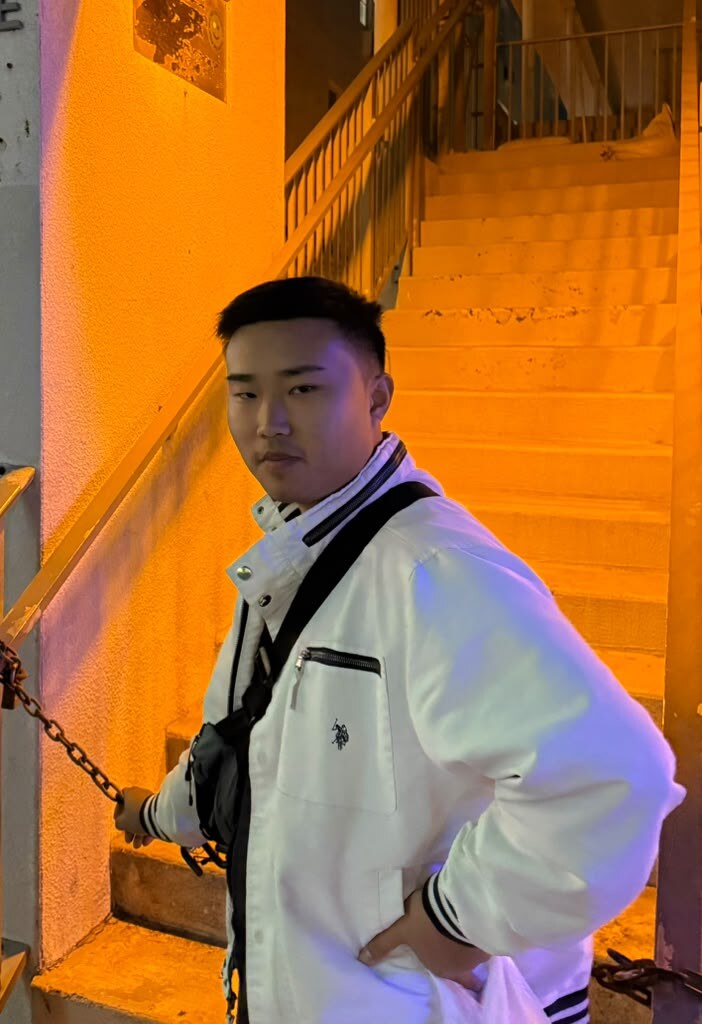
Collaborator – Chinese Language Translator
Howdy! I’m an undergraduate researcher studying under Dr. Voltura. I was born in Nanjing, China, but spent a good chunk of my life in the Houston area. Currently, I am a student of Texas A&M and studying Biochemistry. The parrot project intrigued me because, well, parrots. But other than that, the multifaceted approach of the project is very distinct and novel, and being able to participate is very exciting.
Outside of helping with the research, I help with translating the information we have into Chinese — more often than not, parrots are seen as “exotic pets” than what they truly are: an important part of ecosystems. Such problem especially prevails in China, where rapid modernization has led to much habitat destruction of these precious birds, while much of the population, even those who grew up beside them, don’t have much awareness of their significance.
I believe by educating the people about parrots, more of them will be willing to participate in our conservation efforts for not only the birds, but also wildlife in general. I hope to see people’s passion for protecting the earth to burn like a wildfire, and who knows, maybe this is the spark to start it!
Welcoming Committee
Biography and affiliation forthcoming.
Profile links forthcoming.
Scientific and Data Collaborator
Biography, affiliation, and research interests forthcoming.
Profile links forthcoming.
Parrots in Ethical Research Lead
Preferred full name forthcoming.
Jen will lead our Parrots in Ethical Research initiative, emphasizing research approaches that give birds opportunities to choose whether they participate in research.
Biography and affiliation forthcoming.
Profile links forthcoming.
We recognize the greater parrot community around the world for its contributions to sharing and preserving parrot knowledge over the years.
Siempre que es posible, se reconoce el trabajo de otras personas y se enlaza a su fuente original. Las organizaciones y personas mencionadas aquí no respaldan el proyecto ni colaboran oficialmente con él, salvo que lo indiquemos expresamente.
Participa
Los libros antiguos sobre loros, las revistas de avicultura, los boletines de asociaciones, los registros de cría y las fotografías pueden contener observaciones que no se encuentran en ningún otro lugar.
Ofrecer materiales ↗Estudiantes y voluntarios pueden comentar referencias, localizar archivos PDF solicitados, extraer datos, catalogar, traducir y divulgar la ciencia, como hicieron los estudiantes del proyecto sobre cacatúas.
Ver las tareas de voluntariado →Las fotografías y notas de loros alimentándose son registros útiles. Compártelas a través del proyecto en iNaturalist.
Participar en iNaturalist ↗Si algo en este sitio es incorrecto o está desactualizado, avísanos e incluye la fuente.
Enviar una corrección ↗See our personal investment, current funding needs, and ways to support continued development.
Ver formas de apoyar →De la fundadora
Gracias por tu visita. Si tienes materiales, preguntas, ideas de investigación o correcciones, nos gustaría saber de ti.
Colabora con nosotros ↗EV Voltura, PhD, Founder and Director
The Parrots’ Project. https://theparrotsproject.org/ (accessed [date]).
Replace the accessed date with the date you consulted this page. This is a living resource and its contents change.